Wednesday, March 6, 2019

# 52 Ancestor Challenge 2019, Week 11, Georgia Sappington Family

# 52 Ancestor Challenge 2019, Week 11
Prompt: Large Family


The Parents of All Georgia Born Sappingtons

The Rev. Dr. Cynthia Vold Forde

Richard Sappington had a very large family!  He and his wife, Rebecca Jarrett, were parents of all Georgia born Sappingtons at least to the year 1880.  My line descends through their son, Caleb Sappington who married Martha, daughter of Lawrence and Nancy Henderson Bankston.  The line from Caleb and Martha continues: 

Rebecca Jarrett Isabella Sappington married Jacob Rutledge Brooks
Martha Brooks married Elijah McDonald
Rebecca Jarrett McDonald married William Anderson Miller
Coy Clifton Miller married Ruby Anna King
Rose Miller married Ervin Gelnor Vold 
AND HERE I AM!


Timeline Richard Sappington

July 25, 1763 - Friday, Richard Sappington was born in Anne Arundel County, Maryland to John Sappington Jr. and Ann Everett.

1763: Death of his father—John Sappington, Jr.
17 October 1765:
Maryland Hall of Records filed in Anne Arundel County, in 1765, Prerogative Court, Box 5, fld. 14
"17 October 1765 - John Sappington of Anne Arundel County, deceased made a deed of gift to his son, Richard.
Gleanings from Maryland News Papers: 1727-1775 by Robert Barnes, 1976.
Annapolis, Maryland Gazette

1764: Richard’s Mother remarried—"Ann, mother of Richard and his three siblings, married Nicholas Ridgely of Baltimore, Maryland."
(Gleanings from Maryland News Papers: 1727-1775 by Robert Barnes, 1976. Annapolis, Maryland Gazette).

11 March 1773: Estate settlement for John Sappington, Jr.
John Richard, and Margaret executors. John Sappington, Jr. was the first-born son of John Sappington, Sr. and his wife, the former Sarah Sherbert of Anne Arundel County, Virginia. John Jr. was born into this world on February 6, 1734; he departed on February 13, in the Year of Our Lord, 1765.  John was thirty-one years and one week. John was the 2nd great-grandson of Nathaniel Sappington, the immigrant.  Citations: From Linda Starr, a descendant of The Rev. Joshua Starr, on July 3, 2000.

11 December 1785 Sunday, Richard Sappington, Marriage, Richard was 22 years, 4 months and 19 days.  Source: Bible Records of William Jarrett Sappington
18 December 1787: Birth—Caleb Sappington, son.
14 November 1788: Deed—Purchase 99 acres on Kettle Creek
21 March 1789: Birth Daughter, Margaret “Peggy” Sappington

10 October 1790: Birth Daughter—Nancy Jarrett Sappington
22 July 1792: Birth Daughter—Mary Elizabeth Sappington
2 December 1803: Birth Son—Henry Thomas Sappington

29 February 1804: Death of Richard’s mother, Ann Everett Sappington Ridgely in Baltimore, Maryland, Ridgely exocusus from Anne Arundel Gentry., Vol. III,.
Ann had three children by Nicholas Ridgely:
Lot Ridgely, d.s.p., 1804
Nicholas Orrick Ridgely married Ann Croxall
Anne Ridgely married William Wellmore.  license Balto November 16, 1797
See Nicholas Ridgely (1743-1830 Anne Arundel Gentry) Maryland Court of Appeals Library, p. 159, printed in 1979.

Nicholas Ridgely, one of the children of William and Mary (Orrick) Ridgely, was born about 1743 in Anne Arundel County.  By the will of his father in 1780, his legacy was negligible, but at that time it is believed that he was established in Baltimore Town.  Before September 8, 1767, he married Anne, the widow of John Sappington, with at least two chidren: Anne and Caleb. On the foregoing date they filed an account with the court reporting an inventory appraised a #163/4/6 and after all obligations against the estate were met, a balance of #161/14/11 remained for the heirs.  Richard Sappington and Thomas Sappington were sureties for the administrators.

6 June 1805: Birth Son—Richard Thadeus Sappington
10 September 1806: Birth Daughter—Sarah Jarrett Sappington
28 Dec. 1814: Estate Settlement of Fadda Jarrett. Early Records of Georgia: Wilkes County Deed Book "OO" Sales for 28 December 1814, Estate settlement of Fadda Jarrett, Richard Sappington, two slaves, 1 negro boy Daniel, 1 Negro boy Sealy.
27 December 1815: Administrator Weaver Estate
Deed Book CCC, 1815-1819, Wilkes County, Georgia; microcopy RH 406-7; Georgia Archives, Morrow, Georgia
1820 U.S. Federal Census, Wilkes County, Georgia,
Richard Sappington.
Ancestry.com 1820 U.S. Federal Census online. Provo, Utah; MyFamily.com, Inc., 2004. Original data; the United States, 1820 United States Federal Census, M33, 142 rolls. National Archives and Records Administrations, Washington, D.C.

1821, District 13 – Capt. Beniah B. Reeves District
1818-1823 Tax Digests, Wilkes County, Georgia; microcopy RHS 378-79; Georgia Department of Archives and History, Atlanta, Georgia.
-Sappington, Richd – 7 slaves, 677 acres 3rd class land in Wilkes County, adjoining ____, originally granted to _ Darden; 250 acres pine land in Early County, district 21, lot 263; 250 acres pine land in Early County, district 16, lot 239.

1821 Land Lottery Explanatory

The land disposed of in this lottery was obtained by treaty with the Creek Indians at Indian Springs Jan 8, 1821.  Covered by five original counties at the time of the survey, namely Dooly, Houston, Monroe, Henry and Fayette counties since divided into twenty-one counties.

A list of names entitled to draw for land in the 164th District or Capt. David P. Hilllhouse's County, in Major Thomas Gordon's Batt. in Wilkes County, Georgia,
Richard Sappington: 2 draws
Caleb Sappington: 2 draws

Richard purchased and sold a great deal of property in Wilkes County, Georgia and in Henry County, Georgia; some of the deed listings are included in the timeline to assist the reader to follow the migration from Wilkes County to Henry County. But the full listing of the deeds will be found in the folder labeled Richard Sappington located on the CD-ROM of the book, The Spirit in the South (Volume II).

1818-1823 Tax Digests, Wilkes County, Georgia;
microcopy RHS 378-79; Georgia Department of Archives and History, Atlanta, Georgia.

1825-1833 Tax Digest, Wilkes County, Georgia; microcopy RHS 379-80; Georgia Department of Archives and History, Atlanta, Georgia.

1825, District 9 – Capt. James W. C. Luker’s District
-Sappington, Caleb – poll only, no slaves or land.

1825, District 14 – Capt. Beniah B. Reeve’s District
-Sappington, Henry T. – poll only, no land or slaves.
-Sappington, Richard – 8 slaves, 677 acres 3rd class land in Wilkes County on Long Creek adjoining B. Moore, originally granted G. Darden; 500 acres pine land in Early County, 21st & 16th districts, lots 363 & 239; one four-wheel carriage, one stud-horse young M__sk
-Sappington, John, no slaves or land, poll only
-Sappington, William J. – no slaves, 68 acres 3rd class land in Wilkes County on Long Creek adjoining R. Sappington, one two-wheel carriage.
-Sappington, Caleb – 111 ½ acres 3rd class land in Wilkes County on Long Creek adjoining R. Sappington, originally granted to G. Darden.
-Sappington, Thdies – poll only, no slaves or land
1826, Tax Digests, Ibid.,
District 12 – Capt. Reeves’ District
-Sappington, William J. – no slaves; 104 acres 3rd class land in Wilkes County on Long Creek, adjoining Albert.
-Sappington, Caleb – 117 acres 3rd class land in Wilkes County on Long creek, originally granted to G. Darden.
-Sappington, Richard (old) – 8 slaves, 477 acres 3rd class land in Wilkes County on Long Creek adjoining B. Moore, originally granted to G. Darden; 260 acres pine land in Early County, 16th district, lot 239; 250 acres pine land in Early County, 21st district, lot 363.
-Sappington, Henry – 50 acres 2nd class land & 152 ½ acres 3rd class land in Henry County, 11th district, lot 167.
-Sappington, Thaddius – no slaves; 111 ½ acres 3rd class land in Wilkes County on Long Creek adjoining R. Sappington, originally granted to Darden.

1826, District 14 – Capt. Thompson’s District
-Sappington, Caleb – poll only, no slaves or land.

1828, District 12 – Capt. Reeves’ District
-Sappington, William J. – 1 slave; 104 acres 3rd class land in Wilkes County on Long Creek adjoining J. Albert, originally granted to Darden.
-Sappington, Richard Jr. – 3 slaves; 202 ½ acres 3rd class land in Henry County, 11th district, lot 154, originally granted to M. Ward.
-Sappington, Richard old – 10 slaves; 880 acres 3rd class land in Wilkes County on Long Creek adjoining B. More, originally granted to Dardin; 250 acres pine land in Early County, 21st district, lot 363; 250 acres pine land in Early County, 21 district, lot 239.
27 January 1830: Deed Sale 41 ¾ acres
Pages 408-409
Dated 27 Jan 1830
Richard Sappington to Ephraim S. Sappington of Wilkes County, Georgia

1830 U.S. Federal Census: Henry County, Georgia, p. 227
Ancestry.com 1830 U.S. Federal Census online.  Provo, Utah: MyFamily.com, Inc. 2004. Original data: 1830 United States Federal Census, M33, 142 rolls. National Archives and Records Administration, Washington D.C.
Richard Sappington, 1 male 20-30; 1 male, 60-70; 1 female 60-70.  (the male could have been John Sappington, son.)

1831 Tax Digest, Henry County, Georgia; microcopy RHS 21-22; Georgia Archives, Morrow, Georgia.
Capt House District – Brushby Knob
Richard T. Sappington, 0 polls, 10 slaves, 202a, 2nd & 3rd class land, Lot 184, Dt 184 [error, should be district 11], waters of South River, Henry County
Richard T. Sappington for Vines Owens, 1 poll, 0 slaves, 92 acres 3rd class land
Henry T. Sappington, 1 poll, 204 acres 3rd class land, lot 167, 11th Dt,, waters of South River, Henry Co
Notes: Lot 167 was later sold by the heirs of Richard Sappington, Sr.

1832 Gold Lottery Henry County - Richard Sappington 2 - 40 acres lots
February 1832: Deed of land to erect church
Freda Reid Turner, Henry Land Records 1824-1838, Deed Books C/D, F, G, H, Vol. II (Roswell, Georgia: WH Wolfe Associates, 1993).
Page 109 of the published source
Deed Book F, page 93
Solomon Grace of Bibb County to Henry T. Sappington, Richard Sappington and others, all Trustees of Methodist Episcopal Church, 2 ½ acres to erect a church in the 11th district on Northern line of lot 122, recorded 18 Feb 1832.
Notes: Evidence of family’s Methodist Church affiliation.  Also, some family burials may be in the cemetery in the area of the church.

19 August 1833 – Deed Purchase Lot # 185 202 ½ acres District 11, South River.
Page 165 of the published source
Deed Book F, page 395
Peter Lamar of Lincoln County to Richard Sappington of Henry, 19 Aug 1833, $200, lot 185, district 11, 202 ½ acres on waters of South River, wit: Charles L. Powell and Thomas Albert, recorded 7 Oct 1833.

31 October 1833 – Deed Sale ½ Lot 185
Page 169 of the published source
Deed Book F, page 479
Richard Sappington to Thomas Albert, both of Henry, 31 Oct 1833, $200, South half lot 185, district 11, 202 ½ acres drawn by Samuel Coulter and deeded by him to Peter Lamon & by him to Richard Sappington.  Wit: B. K. Stansell, Jesse Wade J.P., recorded 4 Feb 1834.

3 October 1836: Deed Sale Lot 204 8th District
Page 310 of the published source
Deed Book H, page 75
Richard T. Sappington to James W. Crockett, both of Henry County, 3 Oct 1836, $40, undivided interest in lot 204, 8th district, wit: O. W. Cox, John T. Bentley J.I.C., recorded 5 Oct 1836.

13 December 1836: Deed Sale by Son Henry T.Sappington
Page 360 of the published source
Deed Book H, page 308
Henry T. Sappington to Silas Mosely, both of Henry County, dated 13 Dec 1836, $700, 293 acres, lot 167, District 11, Wit: Robert Cable, William Camp, recorded 20 Jul 1837.

16 December 1836: Deed Purchase—Lot 167—2 acres 11th district
Page 339 of the published source
Deed Book H, page 205
Henry T. Sappington to Richard Sappington, 16 Dec 1836, $200, 2 acres of lot 167, 11th district, wit: Glen Owen and Seaborn J. Clark J.P., recorded 2 Mar 1837.
Page 407 of the published source
Deed Book H, page 532
Photocopied from microfilm of original and appears transcribed elsewhere in this report.

1837 Tax Digest, Henry County, Georgia; microcopy RHS 21-22; Georgia Archives, Morrow, Georgia.
Capt Posey District - Knob
Richard Sappington, overage, 0 polls, 11 slaves, 212 acres land, 2nd & 3rd quality land, lot 184,11th Dt, waters of South River, Henry Co
40 acres 3rd class land, Cherokee Co [gold lot]
40 acres, 3rd class land, lot 340 2nd Dt, sec 1, Cherokee Co [gold lot]
John Sappington, Rev. Soldier, overage, 0 poll, 0 slaves, 160 acres, 3rd class land, lot 229, 10th Dt
Notes: By John Sappington’s entry is the notation that he was a Revolutionary War soldier.  Both John and Richard Sappington were over the age of 60 and therefore paid no poll tax. In 1837 Richard Sappington still had the 2-40 acre lots that he won in the 1832 Gold Lottery.

20 May 1837: Richard's Letter to Brother, Caleb Sappington in Maryland:
The state of Georgia in Henry County

8 January 1838 Monday,  Richard Sappington died at the age of 74 years, five months and 17 days.

Richard's death was preceded by the death of four children: Margaret "Peggy", John, 
Nicholas, and James Thadeus. He was survived by Caleb (Walton County) Rebecca Collins (Walton County) Henry (Monroe County) William J. (Troup County) Elizabeth Williams (Lumpkin County) Richard T. (Henry County) Nancy Albert (Henry County) Sarah Thomas (Rockdale County, Alabama) and fifty-seven grandchildren. Richard and Rebecca Jarrett Sappington are the ancestors of all Georgia born Sappingtons pre-1880.  


Source: Henry County, Book "h", P. 532, Early Records Of Georgia. Wills And Deeds, Georgia,
Written: February 12 1838
February 12, 1838, Richard Sappington, Sr., deceased. Henry County, BOOK "H' , 
PAGE 532, Early Records of Georgia. Wills and Deeds, Georgia, Henry County :  
Richard Sappington Estate Settlement:
Know all men by these present that I, Rebecca Sappington, widow of 
Richard Sappington, late of the county and state aforesaid deceased, and 
Caleb Sappington and Timothy Collins of the county of Walton, Henry Sappington 
of the county of Monroe, William J.Sappington of the county of Troup, Thaddeus 
Sappington of the county of Newton, William R. Williams of the county of Lumpkin, 
and Thomas Albert of the county of Henry and all of the state aforesaid being 
lawful legatees of the estate of said Richard Sappington, deceased, for 
divers good causes and considerations we hereunto moving have made ordained 
and appointed and by these presents do make ordain and appoint John Albert of 
the county of Henry and State of Georgia and Richard T. Sappington of the 
county of Newton and state aforesaid and legatees of said estate our true and 
lawful attorneys for us and in our names and for our own proper use and 
benefit to sell and dispose of absolutely and in fee simple all and singular 
the goods, chattels, lands and tenements both real and personal belonging or 
appertaining to the estate of said Richard Sappington deceased. at public our 
cry on the premises of said deceased. In the county of Henry and commencing 
on the 13th day of February, one thousand eight hundred and thirty-eight, then 
continuing from day to day until all is sold to the highest bidder as may be 
agreed upon. Then to make equal distribution of the remaining balances among 
legatees of such notes as ten remain. In witness we here of the said, Rebecca 
Sappington, Caleb Sappington, Timothy Collins, Henry Sappington, William J. 
Sappington, Thaddeus Sappington, William R. Williams, Thomas Albert, have 
hereunto set our hands and seals this the 12th day of February 1838.
Witness; Wiley E. Wood Signed:
Widow: Rebecca Jarrett Sappington
Caleb Sappington (married Martha Bankston) 
Timothy Collins (m. Rebecca Sappington)
Henry Thomas Sappington (m. Sarah Owens)
William Jarrett Sappington (m. Martha Hardwick Starr)
Thaddeus Sappington (m. Jerely Turner
William R, Williams (m. Elizabeth Sappington)
Thomas Albert (m. Sarah Sappington)

Documentation Marriage:

a.).)Faddy Jarrett transferred ownership of a Negro girl, Lucy, "unto my son in law, Richard Sappington," dated 21 November. 1793.  County of Wilkes, Georgia, reference: Will Book Volume  KK, Box 33, Georgia Archives.

b.) Links II, by Elizabeth Ramsey: p. 244:  Henry County settlement of Richard's estate: Record books 'H', p. 532 and 'J', p.  145-147. Richard was the administrator of Fadda Jarrett's estate and a legatee. p. 271, "Transfer of sale of the personal estate of John Weaver, widower of Elizabeth Weaver (nee Jarrett).  It states that "Richard Sappington, brother-in-law of John Weaver, made a return on the personal estate of John Weaver for $1,987.00 and three tracts of land."   (Copies of original documents attached)

c.) Early Records of Georgia, Vol I & II, Wilkes County Will Book 1818 - 1819 p.86
Notes for William Partridge:  Executors, signed 31 Jan 1814. Probated 7 July 1817, Richard Sappington, Rebecca Sappington, James Rutledge, Testator.  listed as Testator. to the will of  William Partridge.

d.)Bankston Cousins 1656-1996, by Anne Martin Haigler, Hardbound, Inc. 737A, N. Highway 67, Florissant, Missouri, 63031

e.) Looking Back II, Edwin Donovan Kuykendall 1985, Vol, II;    A copy is in the Dallas, Tx.  library, and the East Point, Georgia. Archives.  Volume 2 tells about the Sappingtons of Maryland & Georgia. "Descendants of Richard Sappington b. July 25, 1763, Md. moved to Wilkes County, Georgia about 1787/88 married Rebecca Jarrett.  ) on pg 156 ---" sets forth an abstract of a will signed 31 Jan. 1814 by William Partridge, probated, 1817, and shows witnesses to that will were Richard Sappington, Rebecca Sappington, and James Rutledge.  Other documents have shown, hereinafter, in this chapter, identify Richard Sappington's widow as Rebecca Sappington, following his death in 1838 in Henry Co, Georgia.  I, therefore, have concluded Richard's wife, before her marriage, was Rebecca Jarrett, daughter of Fadde."

#52 Ancestor Challenge 2019 – Week 10, Uncle Ole

#52 Ancestor Challenge 2019 – Week 10
Prompt: Bachelor Uncle


Saturday Morning Uncle With A Nickel

The Rev. Dr. Cynthia Forde


“Can I have a nickel, Uncle Ole?”  Uncle Ole looked down with a teasing smile, like he might not agree to the request.  “Now, I don’t know if I have any nickels!”   But my two younger sisters and I knew he was fooling us!   When he was in town, he always had a nickel for us on Saturday mornings.  I don’t remember how we knew when he was back home from his job, working as a section foreman on the railroad, but sure, as Saturday mornings arrived. The wind blew word he was home, and we surreptitiously headed for the back door of Axel’s Tavern to go begging for a nickel.   Sometimes it was the three of us kids with Duke, the dog, Babs, the duck, or maybe just one or two of us.  We would walk the half block from our home at 103 South 8th Street, Northwood, Iowa, and make that right turn into the alley to the tavern door.  And inside, through the haze of cigarette smoke, was Uncle Ole leaning against the bar.  “Please, can we have a nickel?” “Well!  Sure enough.  It seems I do happen to have three nickels!”  


I remember the warmth of his smile as he pulled out Buffalo nickels.  That may have been the extent of my childhood communication with my dad’s unmarried oldest brother: the smile, the teasing look, our reward, and his satisfied look of an uncle who loved his three little nieces.


Olaf Bertinas Vold was born to Carl Otto and Sithone Turvold Vold on 5 December 1906, joining an older sister Mabel “Mae,” born on 22 April 1905, at their paternal grandparent's farm home west of Kensett, Worth County, Iowa.  His father, Carl, was 30, and his mother 30.  His immigrant grandparents, Ole Halgrimson and Brynhild Engebretsdotter, lived in half of the house, while the younger family lived in the other half.  Norwegian was the only language spoken at home.  


By the time of the 1910 U.S. Federal Census, Brookfield Township, Worth, Iowa, Olaf was three, his older sister Mabel was 5, and his baby brother Clarence, born on 13 February1909, was one year old.  His grandpa Ole passed away in 1908.  By 1920, the U.S. Federal Census, Iowa, Brookfield Twp., Worth, shows three more siblings added to the family.  Olaf was 13 years old, living at home.  Alice Helene Vold was born on 10 October 1911.  Ervin Gelnor, my father, was born on March 7 1915.  Frances Arlene was born on 6 February 1920.  His grandma Brynhild died on 25 September 1912.  The ancestral farm was then sold to the oldest Vold son, Embrick.  At that time, the Carl Vold family purchased a farm on the west side of Highway 65, north of Kensett.  


According to the Iowa State Census, Worth, Northwood, 1 January 1925,[2] 18-year-old Olaf B. Vold lived at home; he had completed the ninth grade of high school and worked as a farmer.  Mabel's one-year-old daughter, Jean Elizabeth Vold, lived with the family at 206 4thStreet North.  The farm north of Kensett had been sold.   


According to aunt Frances Vold Meyer, “In 1929,  my father loaned his best friend, banker Tommy Groe, a large sum of money.  The bank closed the day after the 'loan,' rupturing a lifelong friendship and creating an unresolved bitterness.  My dad never set foot in a church again.”  Diane Ruprecht Johnson and Bonnie Baker question the amount of money aunt Fran reported, so I will say that it was a large amount of cash for the time.  Diane reports the money was deposited at the behest of Carl's brother, Syver, who worked in the bank.   Tommy Groe must have been involved in anger to break the relationship between two lifelong friends.  But the rest is speculation.  At the time of the 1930 U.S. Federal Census, Northwood, Worth, Iowa, Olaf remained living at home, unemployed.  By the time of the Iowa State Census in 1935, Olaf was a laborer on the Rock Island Railroad. 


The 1940 U.S. Federal Census, Northwood, Worth, Iowa, shows Olaf still single, living at home, and working as a laborer for the railroad.  But the shy, unmarried bachelor’s life changed drastically with the outbreak of World War II and the Draft.  Olaf’s draft notice came on 11 May 1942.[3]  

Draft Notice
Olaf was 5’9” tall, blonde with blue eyes, weighing 160 pounds.  While he was away at war, his oldest sister, Mabel Burnett Vold Hartman, died on 11 May 1944 in Ramsey County, Minnesota.  Olaf was honorably discharged from the U.S. Army in 1945; he received a $420.00 military bonus on 9 May 1949 for 42 months of service.  Olaf returned to his employment as a section foreman for the railroad, a job he held until his retirement at age 65.  Olaf’s mother, Sithone (Susan) died 12 February 1952, and on 4 October 1955, his father, Carl Otto Vold, died. 


During the late 1940s through 1953 or maybe 1954, when we were begging nickels from Uncle Ole, my sisters and I knew better than to go into the front door of Axel’s tavern.  We knew we could find Uncle Ole there some Saturday mornings, and we knew uncle Ole drank too much.  Occasionally, he would show up at our home with too much to drink.  When we were in our teens, we stopped asking for nickels.  I didn't go into that tavern again.  I moved away from town in 1955 and, regrettably, did not see uncle Ole very much after that.  

Memories of Uncle Ole 

Merrilee Vold Reid's vivid memory of uncle Ole was getting knocked on her rear with the recoil of a .30-06 rifle.  When she, dad, and uncle Ole went hunting on a farm, he would teach her how to use a rifle.  After that blow to her dignity, he suggested she wait until she was older, like 12 years old, and maybe he would buy her a rifle.  

Jennifer Ruprecht Gilbertson shared a memory by email on 9 March 2019:  
'He was such a sweet man.  He would visit and stay for a nice dinner and took to our Paula. He was an important memory in our childhood, our visits to Northwood, visits to Grandma and Grandpas, and seeing our Aunts, Uncles, and cousins.  I especially remember Grandma's wire glasses and hairstyle, the pink peppermints on the dining table, the piano, sitting on Grandpa's lap, sleeping in the front bedroom under tons of quilts with mourning doves waking us.  Such sweet and enjoyable family events in our lives."

Diane Ruprecht Johnson's memory was sent by email to Cynthia Forde on 8 March 2019:
"Uncle Ole was a very sweet man.  Mom and dad visited Ole every two weeks, taking him his cigarettes, his favorite whiskey, and chocolates. They talked about old times."

John Ruprecht painted a poignant picture of uncle Ole: "He always smoked unfiltered Camel cigarettes; I remember him taking a big draw off a Camel, blowing the smoke into his white hanky and leaving a brown spot on the hanky.  Uncle Ole then said, 'Now that's a cigarette.'  Uncle Ole lived a very lonely life.  I remember being with dad, dropping uncle Ole off at a railroad yard, pitch black, a sea of trains. Uncle Ole got out of the car and walked into the darkness of the trains.   I asked dad where he was going and was told he was walking to the car he sleeps/lives in.  Very sad and very scary.  I was told uncle Ole was tuff as he had many fights with the rail bums."


Uncle Ole’s sister Alice Vold Knuth died from pancreas cancer on 24 November 1970 in St. Paul, Minnesota.  His brother Clarence died from a heart attack on 12 May 1975 in Minneapolis, Minnesota.  I could not attend those funerals, but Uncle Ole came to my father’s funeral in Northwood in November of 1977, only because my dear, caring cousin Jeanne Elizabeth Vold Hartmann Ruprecht brought him to the funeral.  Jeanne did more than ask Uncle Ole for a nickel.  Jeanne looked out for him, caring for his well-being all of his life.  


I  visited Uncle Ole in Albert Lea; perhaps it was about 1975, not long before he contracted lung cancer.  I don’t recall the conversation; I doubt it was more than an hour of exchanging news.  I don't remember bringing him anything!  As always, he was happy to see me!  I was sad I had not communicated more often.  

Uncle Ole received a pension from the railroad until he died on 28 January 1978[4]at the VA Hospital in Albert Lea, Minnesota.[5]  He was buried in lot 18 at the Sunset Rest Cemetery, Northwood, Iowa.  Rest in peace, uncle Ole!


Vold Siblings; Mae, Fran, Alice, and Ervin"Paul"


[2]Source Information

Ancestry.com. Iowa, State Census Collection, 1836-1925 [database on-line]. Provo, UT, USA: Ancestry.com Operations, Inc., 2007.
Original data: Microfilm of Iowa State Censuses, 1856, 1885, 1895, 1905, 1915, 1925, as well as various special censuses from 1836-1897 obtained from the State Historical Society of Iowa via Heritage Quest.
Description
This database contains Iowa state censuses for the following years: 1856, 1885, 1895, 1905, 1915, and 1925. It also includes some head of household censuses and other special censuses from 1836-1897. The information available for an individual will vary according to the census year and the information requested on the census form. Some of the information contained in this database though includes name, age, gender, race, birthplace, marital status, and place of enumeration. Learn more...

[3]Source Citation

The National Archives in St. Louis, Missouri; St. Louis, Missouri; Record Group: Records of the Selective Service System, 147; Box: 521
Source Information
Ancestry.com. U.S. WWII Draft Cards Young Men, 1940-1947 [database on-line]. Lehi, UT, USA: Ancestry.com Operations, Inc., 2011.


[4]Source Information

Ancestry.com. Minnesota, Death Index, 1908-2002 [database on-line]. Provo, UT, USA: Ancestry.com Operations Inc, 2001.
Original data: State of Minnesota. Minnesota Death Index, 1908-2002. Minneapolis, MN, USA: Minnesota Department of Health.
Description
This database is an index of deaths recorded by the State of Minnesota, USA, from 1908 to 2002. The index includes: the name of the deceased, city and county of death, date of death, birth date, birthplace, mother's maiden name, and state file number

[5]Source Citation

The National Archives at Atlanta; Morrow, Georgia; Records of the Railroad Retirement Board, 1934 - 1987; Record Group Number: 184
Source Information
Ancestry.com. U.S., Railroad Retirement Pension Index, 1934-1987 [database on-line]. Lehi, UT, USA: Ancestry.com Operations, Inc., 2017.
Original data: Records of the Railroad Retirement Board, 1934-1987. Record Group 184. The National Archives at Atlanta, Morrow, Georgia.


Sunday, February 17, 2019

#52 Ancestor Challenge 2019 - Week 9, Rebecca Miller Divorce

#52 Ancestor Challenge 2019 - Week 9
Prompt: In the Courthouse

           
Dedicated to Dorothy Ellison Miller for her Courthouse Discoveries.  Dorothy often enlisted the aid of her sons to drive her to Little Rock, Arkansas, to research.  She always found gems and excitedly shared them with me by handwriting her finds on yellow legal pad paper and sending them by surface mail.  Dorothy was very excited to discover the divorce record for Rebecca Jarrett McDonald Johnston Miller House, my great-grandmother and the step-great-grandmother of Dorothy's husband, Aaron Miller.


Rebecca Jarrett McDonald Johnston Miller House

 The Rev. Dr. Cynthia Vold Forde

Pike County, Alabama, was unusually hot on 24 August 1858. Rebecca Jarrett McDonald was born blissfully unaware of the heat or the tumultuous times that would follow her birth.
Elijah and Martha McDonald rejoiced at the birth of Rebecca, convinced she hung the moon. Rebecca sucked in the August heat and exhaled with a howl. Elijah marveled as his daughter’s newborn flesh turned from blue to rosy pink; he later confided to Rebecca that it was his happiest moment in life. The proud parents congratulated themselves on producing the prettiest baby in Pike County.
Elijah, a Scotsman by descent, was fiercely proud of Rebecca, often boasting to friends and family that she walked and talked earlier than any child he had known. Martha, a descendant of a well-known colonial family, had often reminded Rebecca of the goodly heritage of her name; she was named in honor of beloved grandmothers, but she preferred the nickname “Becky.”
Becky became a big sister to baby William in 1859. Their young lives began with promise until the War Between the States intervened. It must have been frightening for the children to eavesdrop on passionate arguments about the impending war.
In 1861, Elijah penned a promise to join thousands of proud men fighting with a passion for the Southern cause. Four years later, tasting bitter defeat, Elijah was one of the thousands straggling home.
The family struggled to make sense of war, defeat, death, and devastation. During the war years, baby William became ill and died. The young family cried to God in grief and joy that Elijah was alive. Perhaps in a rush to bring life back to earth, Laura Belle was born nine months later, followed by Caleb Sappington McDonald in 1870.
Family tradition says Elijah wanted to move to a quiet place, away from the memories of war, disease, and death. His wife, Martha, was very ill; some say she was depressed and became ill. They may have been en route to Texas or Indian Territory when Martha died near Fort Smith, Arkansas.
Rebecca was thirteen years old at the time, according to family histories. Assuming the birthdate on her death certificate is correct, the move to Arkansas would have occurred in 1872. Rebecca married William Tillman Johnston on 11 January 1874 at the age of fifteen, four months, and eighteen days in Greenwood, Sebastian County, Arkansas.  William Johnston passed away ten years later, leaving the 26-year-old Rebecca a very young widow with four young children.  
Rebecca married William Anderson Miller two years after the death of her husband, Will Johnston.  Bill Miller was a widower who also lost many of his children to the Yellow Fever that took his wife.  His remaining children were unhappy about the marriage; two children were born to the union of Rebecca and Bill:  Fannie Retha and my grandfather, Coy Clifton Miller. 
Rebecca and her four young children lived with  Bill and several of his children in a very small house in Sebastian County, Arkansas.  It must have been chaos when Retha and Coy were born. No wonder they divorced.  Thanks to Dorothy Miller, and her day in the courthouse, we learned that both Rebecca and Bill filed for divorce.  No reason was given...  but the divorce was granted.  Rebecca signed a release on all of Bill’s property.  He signed a release on Rebecca’s property.  Researching Rebecca, memories surfaced from those who knew her:

Memories of Rebecca
Thanks to Retha Miller Looney, Rose Miller Vold, Betty Miller Francis, JoAnn Miller Eid, June McDonald, Retha Frisbie, Linda McDonald Miller, and Barbara Joan Tisher LeRoy for correspondence with memories of Rebecca.
Retha Miller Looney, Rebecca’s daughter, wrote to me in 1974:
My mother was thirteen when she and her parents came up the Arkansas River on a raft from Montgomery County, Alabama, to Fort Smith, Arkansas. My grandmother died on the way, and she is buried at Liberty Cemetery in Greenwood, Arkansas. My mother was taken in by the Johnston family when they first came to Greenwood. She married widower William Johnston and they had four children: Jennie D. Johnston Wright, Doscia B. Johnston McCord, Frank Tillman Johnston, and James “Jimmy” Johnston, who were my half-brothers and sisters. William Johnston died when the children were very small. Two years later, Mother married my father, widower William Anderson Miller. I was their first child, and your grandfather, Coy, was their second child. After my father died, she married a third time to Samuel House. After Sam House died, she came to live with me in Mena, Arkansas, until she died in 1938. She was buried at Liberty Cemetery in Greenwood, Arkansas, next to her first husband under the name House.
Linda McDonald Miller, Rebecca McDonald’s second-great-niece, shared the following insight: “Each story I have been told about Becky relates a very jolly person!”Nieces June McDonald and Retha Frisbie offer another glimpse into the life of Aunt Becky. Retha would have been about fourteen to sixteen years of age, and the period 1927–1929, when the following took place:
Retha Frisbie recalls going to visit Aunt Becky when she was a teenager. Her dad took her to Mena for a revival meeting, and she asked if June McDonald could come along (Oscar and Mary’s daughter). “My grandfather took both girls to Mena to stay with Aunt Becky during the meeting,” Retha recalls. “She was a tiny woman but jolly and teasing all the time. She let June and me do just about anything we wanted to do. Aunt Becky had a real good-looking male schoolteacher boarding with her at the time, so June decided she’d make him a really special dinner. She went out to the chicken coop, killed a chicken, and the two spent all day preparing a fancy dinner unbeknownst to the school teacher, who called shortly before the dinner hour to let Aunt Becky know that he wouldn’t be coming home for dinner that night. Aunt Becky had the most fun teasing June about that for a long time.”
A granddaughter, Betty Miller Francis, recalls fond memories of visiting her “Grandma House” in Arkansas:
I remember going to visit Grandma House (Rebecca) on vacation. It was before my mother (Ruby King) died when I was eight years old. We took a train to Board Camp. Uncle Jim (Judge Jim Looney) picked us up at the train depot around 5:00 P.M.in a touring car. The car was open on both sides with pull-downs to protect us from the rain. We drove out into the country, into the woods, to their house. Her husband, Sam House, must have had dementia, although I did not realize it until I was an adult. She had to care for him like he was a child.
Grandma House had a good sense of humor. She told crazy ghost stories. One of the stories I remember clearly. Back in the old days of horse and buggy, people rode along when they heard the panthers howling; the panthers were chasing them! They started going faster and faster and faster and faster—the panther was gaining ground! FASTER AND FASTER… FASTER AND FASTER!… THE PANTHER WAS CATCHING UP… AND THEY THREW THE BABY OUT TO THE PANTHER!
It scared the hell out of me!
I remember the very next day, we went out in the field to hoe cotton, heard a howl, dropped our hoes, and ran to the house as fast as we could go. Now that I think about it, it was probably a wildcat and not a panther. Do you think so?
I also remember being surprised that the adults ate their meals first. After the adults finished, the children sat down to eat. That was just backward from our house. After dinner, Grandma House would sit on the porch and smoke a cigar. I remember that as well.
When I go up in the mountains and smell pine in the fresh air, I am reminded of my visits to Grandma House. Once, she showed us how to chew the ends of pine twigs to create a “toothbrush.” She was a wonderful, loving grandma.
The role of education loomed large in adult discussions in Arkansas. Everybody talked about going to university. I supposed that to mean the university in Little Rock. Education was an important dream for the future of the Miller children.
Grandma House was a member of the Methodist Episcopal Church. Everybody was Methodist Episcopal. So was my grandpa, William Miller, Scots-Irish by descent. Many of the Miller brothers were ministers and farmers, but of course, they were dead before we came along.
I remember that we went to someone’s house, possibly the home of Ruby Little (Retha Looney’s stepdaughter). They had a stillborn baby. They could not afford to embalm the baby, so it laid on a table by the window for a Wake. That baby on the table affected me greatly; I can still see that baby in my mind.
Aunt Retha Looney married Uncle Jim Looney. He married and had two daughters, Mildred Looney Dowden and Ruby Little. Gertrude was Aunt Retha’s daughter in her first marriage. Jim and Retha Miller Looney were parents of two daughters: Eloise Embry and Helen Tisher.
I also remember going to see Aunt Doscia in Dallas. Oh! How I loved her. She was so good to my sisters, Rose (Miller Vold) and JoAnn (Miller Eid). She would make pallets for us to sleep on.
Rebecca Jarrett McDonald (Johnston Miller House) was survived by three of her six children. Jimmy Johnston, Coy Miller, and Retha Miller Looney lived decades beyond their mother. She was preceded in death by Doscia Johnston (Mrs. Fred McCord), Frank Tillman Johnston, and Jennie D. Johnston Blair Wright.
Rose (Mrs., E.G., Vold), Betty (Mrs. George Francis), and JoAnn (Mrs. Otto Eid) were the daughters of Coy Clifton Miller and his wife, Ruby Anna King Miller. Ruby died in 1932. After her death, the three girls moved from Ennis, Texas, to live with “Aunt Retha” and “Uncle Jim” Looney in Mena, Arkansas, for a year. The girls moved from Arkansas to Iowa and lived with their maternal grandparents. They did not get to see their Grandma' House again. She died in 1938.
“Grandma House” died long before my father, Ervin “Paul” Vold, captured the heart of her granddaughter, Rose Miller. I got to know her through delightful stories of her adventurous raft ride on the Arkansas River and her smoking a cigar or pipe and by looking at photos of the tiny woman with a giant-sized sense of humor who lived a very long life.
Family legends ascribe Rebecca’s longevity to spirit, spunk, and Southern courage. She aged with grace. I loved hearing the humorous, touching tales told to me by aunts, cousins, and a very old man in Rocky, Sims, Arkansas, in April of 2001. The man, purportedly a hundred years old, said: “Miss Becky? Why I do remember her. Yes, I certainly do. She was such a tiny lady driving such a big horse and buggy. She hitched up that horse and buggy and brought her eggs to Sims every Saturday. You could set the clock by Miss Becky’s buggy. She was just about the sweetest woman you could ever meet. She was a real fine lady.”
My favorite Grandma House legend came from my mother, Rose Vold:
Grandma House was a strong Southern woman. She lived through two major wars, the Depression, and tremendous change. She witnessed the discovery of electricity, the invention of gasoline-powered engines, automobiles, airplanes, and the empowerment and employment of women in politics and the workforce. Her strength of character and attitude helped her live to eighty years old. I will outlive her; I will live to two hundred!


 [rlc1]Reatha?

Monday, February 4, 2019

#52 Ancestor Challenge 2019 Week 8, Cynthia's Family Photo

#52 Ancestor Challenge 2019 Week 8
Prompt: Family Photo

Family Christmas 2019 

Ron and Cynthia in Swedish Museum

#52 Ancestor Challenge 2019 Week 7, Ron and Cynthia in Love

#52 Ancestor Challenge 2019 Week 7
Prompt: Love

Swedish Museum Photos of our Wedding and Ron's books


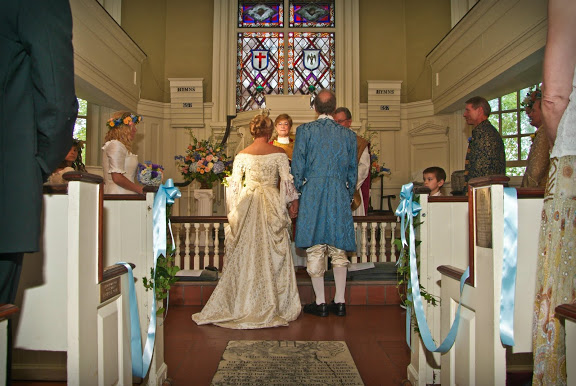
17th Century Swedish Colonial Ceremony at Gloria Dei

Marriage 2011

Staunton, Virginia Sept 2007 Falling In Love


Sunday, February 3, 2019

#52 Ancestor Challenge 2019 Week 6, Barkley Surprise

#52 Ancestor Challenge 2019 - Week 6 
Prompt: Surprises Abound


The John Barkley/BankstonPuzzle

The ancestor John Bankston appears to have begun his mortal journey about 1760, most likely in Orange County, North Carolina.  His name is found in Rockingham and Guilford Counties through the 1780s and 1790s, and eventually in Spartanburg County, South Carolina by 1800.  An older Lawrence Bankston followed the very same migration pattern, strongly suggesting that they were father and son.  But a startling entry in the minutes of the South Carolina Legislature, dated October 28, 1805, reveals that John Bankston’s real name was John Barkley.  This entry consisted of a petition by John Bankston, alias John Barkley of Spartanburgh District, to confirm his legal name as John Bankston “for certain good causes”.  John reveals that his legal name had actually been Barkley but wishes for his posterity to carry the Bankston name henceforth.  John’s petition was granted, and the decision was recorded on December 19, 1805. The Rev. Dr. Cynthia Forde
Learning the true biological parentage of John Barkley is the goal of this research session.  Certain theories can be put forth, such as:
• John may have been orphaned as an infant and adopted by the Bankston family.  He could have been completely unrelated.
• John may have been the grandson or nephew of Lawrence Bankston, perhaps by a daughter or sister who married a Barkley and died soon after John’s birth.
• John may have been fathered by Lawrence and a Barkley woman, who may have died or been unable to care for the child. 

After the research, a big surprise came when YDNA testing was done by two of John Bankston's descendants, showing John was not Bankston nor Barkley.  Instead, he is genetically a Runnels.  

The timeline provided for research places Lawrence Bankston’s birth at about 1730 and John’s birth at about 1760, about thirty years apart.  If correct, this would not allow enough time for Lawrence to produce a daughter old enough to have a baby by 1760, which casts doubt on the second theory shown above.  Clearly, if John’s legal name was Barkley in 1805, he was born to a Barkley parent or parents.  The immediate period around John’s birth, 1760, would be crucial to establishing what Barkley families lived in the same area as Lawrence Bankston, who most likely raised John from early childhood.  According to the timeline provided for research, Lawrence resided in Orange County, North Carolina, until about 1765 and was then removed to Anson County.  Orange County records are excellent and have been abstracted into print.

North Carolina tax lists, those that have survived, have been transcribed and compiled into a two-volume set.  The first volume shows ‘Laurence Bankson in Edgecombe County in 1744 and Orange County in 1755.  A Thomas Barkley also paid taxes in Orange County in 1755, the only Barkley listed.  John ‘Bartley’ was taxed in 1757 in Bertie County, eastern part of the state.  The second volume of tax lists shows Andrew, Ann, Daniel, Peter, and Susannah Bankston in Montgomery County in 1782, but no Lawrence.  Barkleys and variant spellings (Barcley, Barclay, Bartley, etc.) in this second volume were as follows:
Francis B Orange.          1779
George Barkley Northampt 1780
James Barkley Wilkes 1784
James Barkley Wilkes 1782
Joseph Barkley Wilkes  1784
Robert Bartley Orange             1779

Clearly, the Barkley name was not prevalent in North Carolina, which should help the research effort.  Thomas Barkley lived in Orange County at the same time as Lawrence Bankston in 1755.  It would be especially exciting to find a document that names Lawrence and Barkley together, to demonstrate some association.

North Carolina land grants can assist in placing people in certain locations in colonial times.  On May 17, 1754, John Barkley patented 300 acres in Anson County, on the south side of Bear Creek.  Anson County covered a vast portion of the state then, before the formation of Rowan, Mecklenburg, Montgomery, Burke, and others.  There may be several waterways known as Bear Creek in North Carolina, one of them being in Chatham County, adjacent to Orange County to the south.

On May 13, 1755, James Ray patented 240 acres in Orange County, one of the witnesses being H. Barkley.  Robert ‘Bartley’ patented 700 acres in Rowan County on April 4, 1761, on both sides of ‘Buffelow’ Creek.  His name is spelled ‘Barkley’ which he signed with his mark.  Rowan County was also the home of John ‘Bartly’, who signed the survey of John Burnet’s 1756 patent in Rowan County.  Henry ‘Bartley’ owned land adjoining Thomas Gillaspie’s 1758 patent in Rowan County, on both sides of Back Creek, a fork of Second Creek, on the west side of the Yadkin River.  

Another name of interest is William Barclay, who signed the survey for Thoms Lindvall, Sr., for his patent of 200 acres in Orange County on March 20, 1753.  Henry Bartley again appeared as a neighboring landowner in Rowan County to John Killpatrick in 1761.  No Bankston's were mentioned in association with any of these Barkleys or Bartley's, unfortunately.

Court records would be the most likely place to find some explanation for John Barkley being placed in the care of Lawrence Bankston.  Orange County being the most logical location for the nexus of the Bankston and Barkley families, it is fortunate to find the court records transcribed into print, with every-name indexes.  These include bastardy bonds and guardianship orders, beginning in 1752.  The only mention of a Barkley from 1752 to 1766 comes in March 1755.  Thomas Barkley was denied a license to keep an ordinary (tavern).  This source includes a map of Orange County as it existed in 1752, with the future county divisions shown with dotted lines and the year of formation for each one.  Another set of transcribed court records, beginning in 1752, includes Thomas’ petition for the ordinary license in March 1755.  On the same page, Lawrence ‘Banckson’ appeared on a list of justices of the peace.  These court minutes also show Lawrence being sued in September 1755 by Blake Baker, the charges not specified.  Thomas Barkley is seen on the same page, embroiled in three lawsuits against Nathaniel Owens, Joseph Barker, and Henry Reynolds.  The cause of all three seems to be debts owed.  In September 1757, William Richmond sued Thomas Barkley, the reason not stated.  The case continued into December 1757, and Thomas had to pay Richmond for damages.  

Later Orange County court minutes from 1762 to 1766 did not mention Bankston's or Barkleys.  The volume covering 1777 to 1786 did contain one interesting entry from the August 1784 term of court.  John Bartley, age eight, and Eleanor Barton, age six, orphans of Francis Bartley, deceased, were bound to James Neal until they reached adulthood.  This is the type of court entry we hope to find involving John Barkley and Lawrence Bankston.  From this, we learn that Francis Barkley, who paid taxes in Orange County in 1779, had died by 1784.  He had a son named John, born about 1776, and can be eliminated as a possible father of John Barkley/Bankston.  Notice how the name was spelled ‘Barkley’ in the tax assessment, then ‘Bartley’ and even ‘Barton’ in the above court entry.

Wills of Orange County were abstracted into print from 1752 to 1800.  But no mention of Bankston's, Barkleys, or Bartley's could be found.  If Thomas Barkley of Orange County left a will, perhaps it was filed in one of the counties formed from Orange.  A statewide index to North Carolina wills does not list Thomas as Barkley, Barclay, or Bartley.  There were a few Barkley wills before 1800, namely for William in 1796, Hendry in 1798, and Robert in 1786, all in Rowan County.  The only relatively early Barkley will be for George of Northampton County in 1788. Northampton County is far to the east of Orange County, but printed abstracts of that county only took a minute to search.  George Barkley’s will, written in 1784, listed his wife and children but did not mention John or any Bankston.

Three Barkley men have been identified in Orange County in the 1750s, namely Thomas, ‘H.’, and William.  The latter two may be the same as Henry and William, who later showed up in records of Rowan County.  Thomas’ name is not noted in the records after the 1750s, suggesting that he died intestate or moved away.

Abstracted court records of Rowan County from 1753 to 1789 mentioned Robert, David, and Henry Barkley, and no Bankston's.  Rowan County will show that Robert Barkley’s 1786 mentions a son John. Still, John Barkley continues to appear in Rowan County records concurrently with the ancestor John Barkley/Bankston’s appearance in Rockingham County and Spartanburg District.  Rowan County tax lists from 1757 to 1800 show John ‘Berkley (Bartly)’ in a 1785-1786 list of men who paid the county marriage tax.  John Barkley paid taxes in 1793 on 156 acres and in 1798 on 670 acres.  No Bankston's were noted in this source.  This John Barkley in Rowan County is distinct from John Barkley/Bankston, who is believed to be in Rockingham County with Lawrence in the 1790s.  John Barkley of Rowan County can be seen marrying there in 1785 to Jean Knox and in 1790 to Gailey Kern.  He is seen still residing in Rowan County in the 1790 census, long after John Barkley Bankston is documented in Rockingham County land grants.

A statewide index to North Carolina marriages contained only one Bankston marriage, of seemingly little significance.  Few Barkley marriages were shown, but many early North Carolina marriage records have been lost.  This statewide index demonstrates the distribution of the Barkley name in Rowan, Rutherford, Mecklenburg, New Hanover, Lincoln, and Orange Counties.  Three Bartley marriages took place in Guilford County and two in Orange County, as listed below:
Rachel Barkley         m. Joseph Finney, Jr.   13 Dec 1783  Orange NC
Anne Bartley m. Lewis Roach             27 Jul 1783 Orange NC
Elinor Bartley  m. William Parsons  25 Jan 179 Guilford NC
John Bartley  m. Rachel Field   3 Mar 18 Guilford NC
Mary Bartley m. Thomas Wilson        18  Jun 179 Guilford NC

The Cantrell name appeared in the marriage records of Orange, Guilford, and Rockingham Counties, which is no surprise.  

Another statewide index was searched for John Bankston or Barkley’s name in Revolutionary War lists but to no avail.  The national compilations of service and pension records related to the Revolution do not mention John with either surname.  Official North Carolina colonial and state records are available at the Family History Library, fully indexed and arranged chronologically.  The index shows a few Barkley entries, with some variant spellings.  Each of these was followed to the appropriate volume and page, but none contained anything helpful.  No John Bankston entry appeared in the index.

Continuing with the survey of county court records, Guilford County court minutes were searched next.  Guilford was formed from Rowan and Orange Counties in 1771, but the Family History Library did not have court records for Guilford before 1781.  The court records from 1781 to 1788 have been transcribed into print and fully indexed.  This is important since microfilmed court records are usually not indexed or only for the principal people involved in each entry.  Witnesses, jurors, road overseers, etc., would not be included in most court records indexes.  The Guilford court minutes show that in August 1782, Ralph Gorrell sued John ‘Berkley’, the reason not stated.  On the same page is a list of persons cited to appear and show cause why their estates should not be confiscated.  Among these was Rachael ‘Barkely’.  Another entry from the May 1785 session of court gives details of orders for the overseer of roads.  The paragraph is devoid of punctuation, and one part reads, “…to Cantrell Meeting House Laurance Bangston….”  This certainly places Lawrence and the Cantrells in Guilford County in the middle 1780s.  The identity of John ‘Berkley’ and Rachael ‘Barkley’ would be very desirable to learn.  The subject of this research effort, John Barkley/Bankston, would have been a legal adult by 1782 and may have been the man sued by Ralph Gorrell.  This questions whether John had used the Bankston surname from a young age or took it after adulthood.  Rachael may have been related, perhaps widowed and in dire financial straits.  She would have to be at least forty-five years old to be his mother, not at all unlikely for a widowed head of household.   

Guilford County's record includes an 1800 will of Lewis Holton, with Rachel ‘Bartley’ named as one of his daughters.  She may have been the same woman mentioned in the court record above.  Perhaps land records of the county would clarify her identity further, so these were searched next.  In August 1784, John ‘Bankson’ and Martha Smith witnessed a deed for John Browder, the land on Wolf Island Creek.  An October 1795 deed of sale by Robert Peirce references ‘widow Bartley’ as a neighboring landowner in the Hickory Creek area.  Perhaps Widow Bartley was Rachael Barkley mentioned above, the same one in danger of losing her land.  No earlier deeds were found that might have revealed the name of Rachael’s deceased husband.

Guilford County land grants show that John ‘Bankson’ entered 300 acres on November 4, 1783, the land located on Wolf Island Creek near Widow Browder and Charles Harris.  An entry of 200 acres by Robert Shaw on February 29, 1780, on the waters of Big Alamance (Creek) mentions that it includes “John Barkley’s improvement.” Perhaps he was the husband of Rachel.  

A topographical map of this area of North Carolina shows the Big Alamance River in the southeastern part of present-day Guilford County. At the same time, Wolf Island Creek is a considerable distance north, in the northeast corner of Rockingham County, almost to the Virginia border.  Hickory Creek, where Widow Bartley lived, is also in the southern part of Guilford County.  It does not show on the map used in Document 18, but the location was learned through a Google Maps search.  The distance between the two areas diminishes the likelihood that these Barkley/Bartley families were related to John Barkley Bankston.

Rockingham County, created from Guilford County in 1785, does not have much to offer for the purposes of this research effort.  While there were several entries in the deed abstracts about John and Lawrence Bankson/Bankston, these are all included in the timeline provided for research.  The Barkley name, in its various spellings, could not be found there.

Some members of the ancestral Bankston family are believed to be in Montgomery County, North Carolina by 1782, although Lawrence remained in Rockingham County through 1796.  Records of Rockingham County show that on December 9, 1790, John Bankston sold to Lawrence his 300-acre grant on Wolf Island Creek.  By the following December, John was documented in Spartanburg District, South Carolina, so he preceded Lawrence to that area by several years.  This information comes from the timeline provided for research.  It is possible that members of the Barkley family also moved to Spartanburg District, as people often migrated in groups of friends and relatives.  Will abstracts of Spartanburg County from 1787 to 1840 mention the well-known dispute over the executorship of Isaac Cantrell’s will, which includes John ‘Bangston’ as a witness.  A John ‘Barclay’ brought suit against William Moore in September 1786.  The suit continued into 1788 when his name took on the spelling of Barkley.  William Barkley testified on behalf of John Barkley in a September 1788 session of the court.  These Barkleys preceded John Barkley Bankston to Spartanburg District, as demonstrated by the timeline that shows John selling land in December 1790 as a resident of Rockingham County, North Carolina.  That does not preclude some relationships, but the records do not reveal if such a relationship exists.

The Barkley marriages shown above in Document 13 may be for persons related to John.  Tracking the migrations of these couples might be interesting to see if any ended up in Spartanburg District.  Joseph Finney, who married Rachel Barkley in Orange County in 1783, was searched in online forums.  A posting in the North Carolina Genweb site tells that ‘Rachael’ Barkley was born about 1762 in Orange County and died about 1807, the place not specified.  The person who submitted this query requests more information about Rachael and her parentage.  Francis and Thomas are the two possibilities suspected of Rachael’s father.  There was another Rachael Barclay who lived in Rowan County, born about 1784, daughter of Robert.  This posting does not tell where the Finney family may have subsequently lived or if they ever left Orange County.

The 1790 census shows the Joseph Finney name in Surry County and was not found in either North Carolina or South Carolina in 1800.  Other states near the Carolinas did not have surviving censuses before 1820, so it is possible the family went to Tennessee or Georgia, but apparently not South Carolina.

Anne Bartley married Lewis Roach in Orange County in 1783.  His name is noted in Orange County in 1790 and Greenville County, South Carolina, in 1800. Greenville County and Spartanburg County share a long border in the present-day geographical configurations.  Lewis Roach’s name is not found in 1810 in any available states.  Online sources contain Lewis’ ancestry but do not even speculate on Anne’s parentage.

William Parsons, who married Elinor Bartley in 1792 in Guilford County, still resided there in 1800.  The 1810 census shows men by that name in Surry County, North Carolina, and Pendleton District, South Carolina.  In-depth research would be needed to determine if either had a wife named Elinor, but since they did not live in Spartanburg County, the effort does not seem warranted.  Ancestry.com’s World Tree Project contains one posting asserting that Elinor/Eleanor, born about 1771 in Guilford County, was the daughter of Jeremiah Bartley, a name not seen in any of the statewide indexes for North Carolina.  

John Bartley married Rachel Field in 1800 in Guilford County, rather late to be closely related to John Barkley Bankston.  Several men named John Bartley in the 1810 census, four in North Carolina and one in Marion County, South Carolina.  Nothing helpful could be found online for John Bartley and Rachel Field.  

Thomas Wilson, who married Mary Bartley in 1798 in Guilford County, has a much too common name to attempt to trace forward.  There were twelve of them in the 1810 census of South Carolina, none of them in Spartanburg County.  Nothing helpful from other researchers posting online could be found.  In all of the above searches, the Bartley spelling was substituted with Barkley for additional possibilities.

The most likely Barkley relative to John found so far is Thomas Barkley of Orange County, noted there in the 1750s.  Francis Barkley had small children in 1784, which makes him an unlikely candidate to have fathered a child in 1760.  Thomas or one of his sons may have fathered John with the daughter of Lawrence Bankston.  At any rate, it seems that John’s Barkley origins were treated as a private family matter.  If illegitimacy occurred within a family and the child was kept in the home of its birth, court proceedings were usually not considered necessary.  Bastardy bonds are seen when a woman seeks support from the child's father.  Guardianship actions were employed when a non-relative was chosen to provide for an orphaned or illegitimate child without a provider in the home of the child’s birth.  This researcher has confirmed through DNA testing that such a situation occurred in her family in 1810.  A child was born out of wedlock to the daughter of the head of the family, according to family tradition.  That head of the family, actually the child’s grandfather, raised him as his own and called him by his own surname.  No court records have supported such a situation, but the DNA testing confirms the family lore.  The predicament was a private family matter that, in that period, did not require any legal action.  This seems to be the case for John Barkley/Bankston.

Raquel Lindaas, Heritage Consulting